Reeland
Southern California real estate & development giant
Scroll to explore
Reeland Investments is a California luxury real estate development firm. They came to us having lost control of their own domain and server, with a site that didn’t show off their projects. We recovered both and put the portfolio front and center.
Services
UI & UX Design
Webflow Development
Industry
Real Estate & Development
Date
February 2026
The challenge
Before any design or content work, Reeland had a more basic problem: they had lost control of their own online presence. The domain and the server access were both gone. Nobody knew which registrar held the domain or how to get back into the server that ran the site.
That is more serious than it sounds. If you can’t access your domain, you can’t move your site, fix your email, or stop someone else from taking it when it expires. If you can’t access your server, you can’t update or secure the site. The business was effectively a guest on its own website.
And there was a second, more visible gap. Reeland develops luxury homes, dozens of them, but the site didn’t feature the projects. The single best reason to hire them, the work itself, wasn’t on display.

The Solution
We started with recovery. We tracked down where the domain was actually registered, worked through the access, and got control of it back into the client’s hands. Then we recovered access to the server, so the site could be managed and secured again.
With ownership restored, we turned to the site itself. We built a featured projects section that puts the portfolio at the center of the experience, the residences, the locations, the details, so a visitor sees the quality of the work right away instead of having to imagine it.
The site runs on Webflow, so once it was back under control, the client and our team can keep it updated without friction.
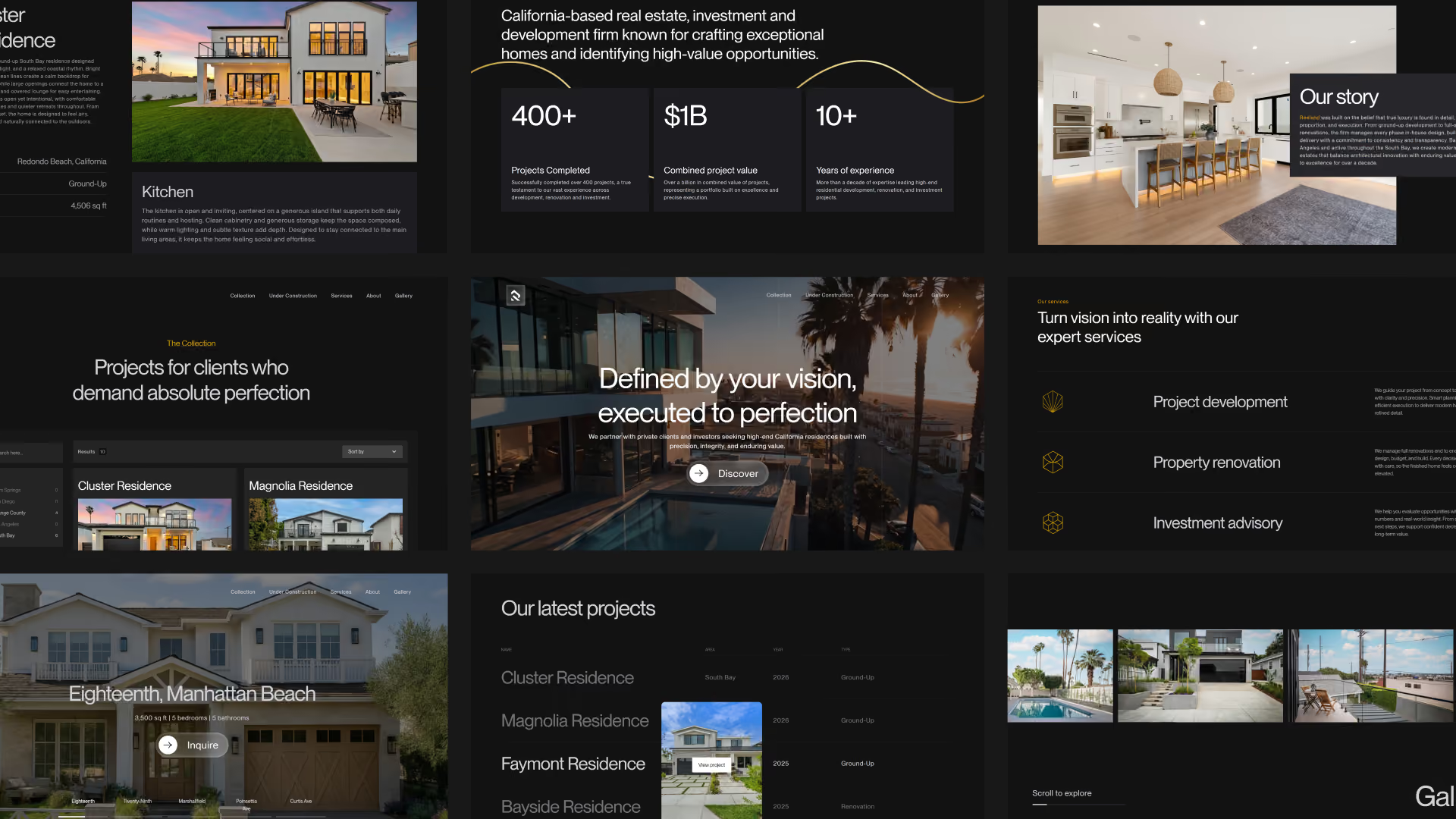
The result
Before any design or content work, Reeland had a more basic problem: they had lost control of their own online presence. The domain and the server access were both gone. Nobody knew which registrar held the domain or how to get back into the server that ran the site.
That is more serious than it sounds. If you can’t access your domain, you can’t move your site, fix your email, or stop someone else from taking it when it expires. If you can’t access your server, you can’t update or secure the site. The business was effectively a guest on its own website.
And there was a second, more visible gap. Reeland develops luxury homes, dozens of them, but the site didn’t feature the projects. The single best reason to hire them, the work itself, wasn’t on display.

The takeaway
Owning your domain and server is step zero, you don’t really have a website until you control both. Recover that first, then make the site lead with the work, and a portfolio business has something that protects it and sells for it.